
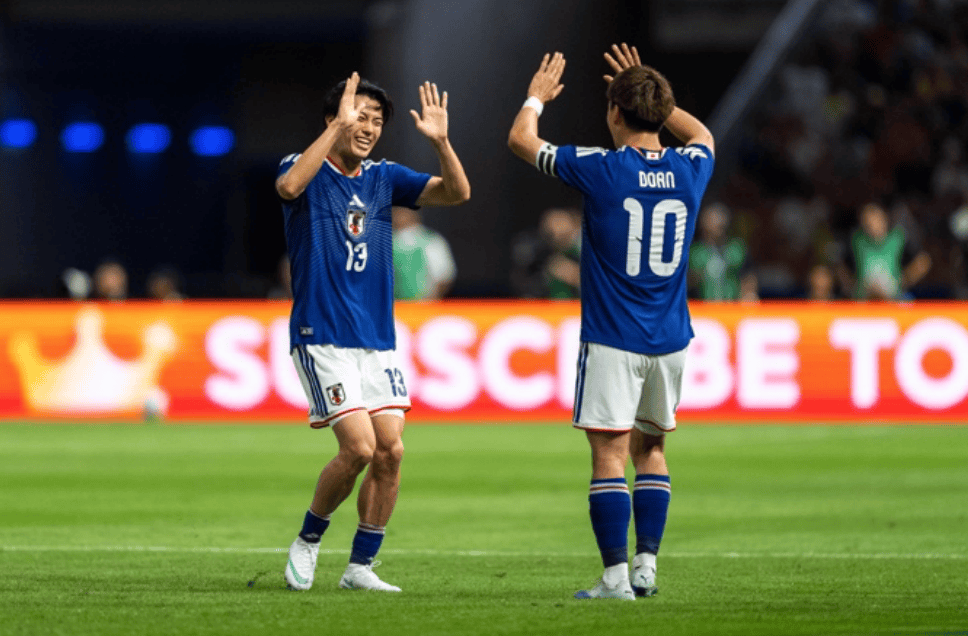
Japan produced one of the most memorable performances of the Mizuho Blue Challenge – The Kallang Football Series, beating Brazil 3–2 in a pulsating encounter at the National Stadium on Saturday, 14 November. The Samurai Blue raced into a two-goal lead, weathered a fierce Brazilian comeback and then found a stoppage-time winner through Tatsuhiro Sakamoto, turning an already compelling contest into a dramatic finish.
The result was particularly significant given Japan’s recent history against Brazil. Having been unable to overcome the five-time world champions at the FIFA World Cup, Japan showed that they could compete with the very best, even after seeing their advantage disappear. The final goal sparked furious protests from the Brazilian players and staff, and the match ended amid a heated exchange of emotions.

With a strong contingent of Samurai Blue supporters filling the National Stadium, Japan began with confidence and wasted little time in testing Brazil’s defence. Takefusa Kubo opened the scoring in the 15th minute after driving forward down the flank. With limited support around him, the forward took responsibility himself, taking on the Brazilian defenders before finding the back of the net.
Japan’s second arrived just four minutes later. After threatening again in the attacking third, the hosts doubled their advantage through Kyoga Nakamura in the 19th minute, putting Brazil under unexpected pressure. For a spell, Japan’s movement and willingness to attack gave them the upper hand, while Brazil struggled to find the rhythm and control usually associated with their play.
Brazil gradually worked their way into the contest, however, and began to make better use of their attacking quality. Estêvão had an opportunity that was kept out, before Vinícius Júnior gave the visitors a way back into the match in the 33rd minute. The Brazilian forward unleashed a powerful effort from distance, reducing the deficit to 2–1 and changing the momentum before half-time.

Brazil emerged with greater urgency after the break, with Raphinha among those driving the team forward as they searched for an equaliser. The visitors made changes in an effort to raise the intensity, and Japan increasingly had to work without the ball as Brazil pressed for a way through.
The pressure eventually told in the 75th minute, when Vinícius Júnior struck again to bring Brazil level at 2–2. His second goal was a reminder of the individual quality Japan were up against, and briefly threatened to turn the match into a familiar story for the Samurai Blue after surrendering their two-goal lead.
Moriyasu acknowledged after the match that the equaliser brought back memories of Japan’s previous meeting with Brazil at the World Cup. But rather than allowing the setback to define the evening, his players continued to push forward and fight for a result. He also praised the contribution of his substitutes, saying the quality of the team had not dropped when fresh players came off the bench.
That depth was an important part of Japan’s performance. Moriyasu said he was pleased that the replacements had been able to maintain the level set by the starting line-up, while recognising the challenge posed by players such as Vinícius. Japan, he suggested, would need to meet that kind of individual brilliance through collective effort.

Just as the match appeared to be heading towards a draw, Japan found one last opportunity to snatch victory. Tatsuhiro Sakamoto scored in the first minute of stoppage time, sending the home supporters into celebration and giving Japan a 3–2 lead at the death.
The goal was followed by an angry reaction from the Brazilian side, who protested that Bruno Guimarães had been fouled in the build-up. The referee allowed the goal to stand, and the disagreement quickly escalated, with tempers flaring around the pitch. The situation became sufficiently heated for security personnel to enter the field, while members of the Japan bench were visibly animated and urged their players to remain calm.
The match ended with red cards for Brazil coach Carlo Ancelotti and Raphinha, adding another dramatic chapter to an already eventful evening. Whatever the controversy surrounding the final goal, Japan had held their nerve in the closing moments and finished the match with the victory.

For Moriyasu, the significance of the result went beyond beating a celebrated football nation. He said Japan represented its own people when playing as a national team, but also felt a responsibility as a representative of Asia, particularly when facing leading teams from around the world. He hoped the performance would give Singaporean and other Asian supporters a sense of pride, and encourage other countries in the region to believe they could challenge the world’s best.
In the official post-match comments, Moriyasu said: “The players challenged aggressively, both in attack and defence, to win.” He added that the team had tried to learn from its World Cup experience and turn those lessons into progress, saying: “I think that determination to keep fighting led to today’s win and growth for the future.”
He also reflected on the match as a particularly meaningful moment in his time in charge of Japan, describing it as the best match he had coached with the senior national team. For a side that had previously struggled to get the better of Brazil, the performance offered a glimpse of what they could achieve when their attacking ambition, resilience and squad depth came together.
Ancelotti, despite his disappointment at the result, also found positives in Brazil’s response after going two goals behind. He said the team had improved after a difficult first half, playing with greater intensity and rhythm as they fought their way back into the match. He was pleased with the opportunities given to younger players, who he felt had shown good quality, while acknowledging Japan’s organisation and competitiveness.
“We conceded two goals, but afterwards the team reacted well. We played well, with intensity and rhythm, and we tied the game. We could have won the game at the end with Endrick. Obviously, the result is a shame because I do not like losing games, but we have to look at what we did well, and there were many good things,” he said. Ancelotti also praised Moriyasu’s work with Japan, describing the team as competitive and well organised.

The excitement extended beyond the pitch at the Mizuho Blue Challenge Fan Zone, which was open across all three match days as well as Sunday, 15 November. With nine partners offering activities for the whole family, there was plenty for supporters to explore before and after the football.
Fans could pick up Singapore and Japan jerseys at the adidas x Weston booth, browse exclusive event merchandise at the Official Store and discover the nation’s football history through the Football Association of Singapore’s “Through The Tunnel” exhibition. There were also opportunities to take home a few keepsakes, including photos from the Sony Photo Booth and customised tote bags from the Feel Alive Zone. Ticketed fans could try their luck at the Sushiro prize wheel, adding another activity to the matchday experience.
The Fan Zone will also have a special appearance on 17 November, when Singapore football legend Fandi Ahmad meets supporters at the Feel Alive Zone. Fans will have the opportunity to take photos and get autographs, while Kallang Kaki members can pre-register through The Kallang App for priority access. Slots are limited, so early registration is encouraged.

The Mizuho Blue Challenge – The Kallang Football Series continues with its final fixtures on Tuesday, 17 November, when Singapore take on Brazil and Japan meet Paraguay at the National Stadium. After Japan’s dramatic victory over Brazil, the closing matches offer another opportunity for local supporters to see international football at the highest level, while giving the participating teams one more chance to test themselves against unfamiliar opposition.
For Japan, Saturday’s result was a statement of intent and a source of pride for supporters across Asia. For Brazil, it was a frustrating defeat, but one that also offered Ancelotti a chance to assess his younger players. And for Singapore’s football fans, the five-goal thriller was a reminder of the quality and drama that international football can bring to The Kallang.
Photo Credit: The Kallang
The final matches of the Mizuho Blue Challenge – The Kallang Football Series Singapore features Singapore vs Brazil and Japan vs Paraguay on 17th November 2026 at The Kallang. More information available on The Kallang

