
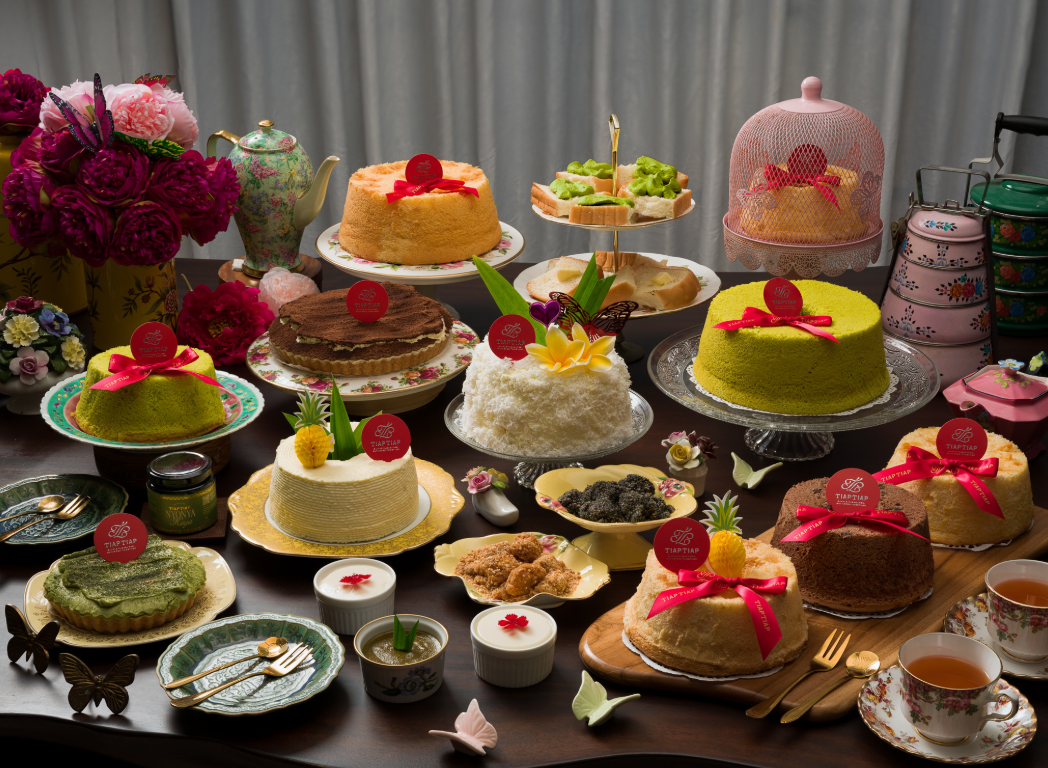
At 374 East Coast Road in rustic Joo Chiat, homegrown business Tiap Tiap Treats has opened its first physical storefront, marking six years since the brand first emerged from a home kitchen during the COVID-19 pandemic, and a full-circle moment for one of Singapore’s most quietly beloved heritage food labels.
The opening was officiated by Mr Edwin Tong, Minister for Law and Second Minister for Home Affairs and Member of Parliament for East Coast GRC (Joo Chiat), underscoring the brand’s place within a neighbourhood long associated with Peranakan heritage and evolving food culture. For founder Sophia Yeow, however, the milestone is less about expansion than continuity. “We designed our store to be an extension of our home,” she says. “Everything here carries pieces of our family life.”

Tiap Tiap Treats began in 2020 in the most unassuming way: friends asking Sophia to cook during lockdown. At the time, Sophia, a former marketing executive with two decades of experience in healthcare technology, including leadership roles at GE Healthcare and Philips across APAC, had no intention of starting a business. But what began as casual cooking quickly turned into structured demand.
Customers wanted consistency. They wanted something they could return to. Her first offerings were simple but defining: a pandan chiffon cake made with hand-pressed pandan juice, and traditional savoury items like radish and yam kueh. From those two products, a brand quietly took shape. Growth was entirely organic. There were no ads, no campaigns, just word of mouth and a steadily expanding community of customers who began sharing the food as much as they consumed it. Even today, Sophia is candid about that history. “We’ve never really advertised,” she says. “This is the first time we’re doing a formal PR effort.”

In 2024, her work was recognised when she won the Lee Kum Kee Supreme Chef Challenge Season 2, adding formal culinary validation to what had already become a deeply trusted homegrown brand.
Two and a half years ago, Sophia’s daughter, Nicole Lian, made a decision that would reshape Tiap Tiap’s future. Nicole, who studied systems engineering and product design and worked in London before returning to Singapore to join an early-stage technology startup, left her corporate path in 2024 to join the family business.
Her decision was shaped in part by a month-long family trip across Japan. Travelling from Osaka and Kyoto through Kyushu, the family explored pottery fairs, vintage craft towns, and small cultural institutions. In Arita, Nicole remembers watching her father navigate a ceramics festival carrying luggage for the family, a quiet moment that shifted her perspective on time, family, and legacy. “I realised my parents were getting older,” she says. “And I didn’t want to only observe what my mum had built. I wanted to build it with her.”
Back in Singapore, Nicole began transforming instinct into structure, introducing systems, operations, and long-term planning to what had been a deeply intuitive home kitchen operation. She jokingly assigned roles within the family: Sophia as CEO, her father as CFO, and others as part of a family-run “organisation.” Convincing everyone took time. But gradually, the business evolved, establishing a central kitchen in Bedok, refining production systems, and laying the groundwork for retail.

The Joo Chiat storefront is intentionally uncommercial in feel. It is designed as an extension of home, anchored by warmth rather than retail efficiency. At its centre is Sophia’s personal collection of vintage English fine bone china, pieces collected over years and previously used only in her home and private dining experience, Butterfly Table. For the first time, they are displayed publicly in the store, turning personal memory into spatial design.
A heritage mural by a Singapore muralist further grounds the space in its neighbourhood context, visually linking Tiap Tiap to Joo Chiat’s layered cultural identity. Butterfly Table itself continues to exist as a private dining experience hosted by Sophia, an intimate, storytelling-driven evening centred on Peranakan cuisine and the same philosophy of food as gathering. Together, these elements turn the shop into something closer to a lived-in home than a retail bakery. “We want people to feel like they’re coming home,” Sophia says. “Not because they have to, but because they want to.”

Tiap Tiap has become known for its signature pandan chiffon cake made with Japanese cake flour and hand-pressed pandan juice, served with a separate bottled gula melaka drizzle that completes the experience at the table. Alongside it are cakes that reinterpret nostalgia through craft: Ondeh Ondeh Cake, Banoffee Pie, and Chocolate Cream Cake.
The Chocolate Cream Cake draws inspiration from neighbourhood bakery chocolate Swiss rolls, reimagined with Van Houten chocolate rice, Valrhona dark chocolate, layered textures, a touch of salt, and subtle edible gold. The intention is not to replace nostalgia, but to deepen it.

A healthier pandan chiffon variant was also developed over six months using monk fruit as a sugar substitute, tested with continuous glucose monitors, reflecting a quiet experimentation with wellness without abandoning indulgence. Nicole’s Banoffee Pie also adds a contrasting British note, a dessert that feels both familiar and rare, attracting a cross-generational following of younger dessert lovers and older customers alike.

Beyond cakes, Tiap Tiap’s savoury range draws deeply from Sophia’s Peranakan and Cantonese roots, translating heritage recipes into modern formats. Offerings include paper-wrapped chicken (jipao gai), Teochew ngoh hiang, Nyonya curry midwings, seafood youtiao, olive truffle rice, handmade fish balls, and other dishes previously served in her private dining concept.
Many are sold frozen with cooking instructions, designed for busy households seeking heritage meals without time-intensive preparation. Sophia insists on fresh market sourcing and hands-on preparation, even for labour-intensive processes like individually wrapping chicken parcels, a practice she sees as essential to preserving authenticity. “I like food that sits between identities,” she says. “Between tradition and now.”

The store also offers smaller, everyday items designed for casual enjoyment: fish keropok made with mackerel, DIY muah chee that stays soft even when chilled, and hand-stirred Nyonya kaya made without egg whites for a richer, more umami-forward spread. Each product reflects the same philosophy: familiar flavours refined through technique, designed for modern storage, convenience, and texture consistency.

For Sophia, opening in Joo Chiat is a return rather than an expansion. Having grown up in the East Coast area, she recalls childhood food landmarks and neighbourhood routines that shaped her sense of taste and memory. Joo Chiat, with its mix of heritage Peranakan culture and contemporary food innovation, mirrors Tiap Tiap’s own identity. It is a place where old and new coexist, much like the brand itself.
From a two-product home kitchen operation to a central kitchen in Bedok, and now a storefront in Joo Chiat, Tiap Tiap Treats has grown without traditional advertising or mass-market visibility. Instead, it grew through repetition, recommendation, and return visits, a community built slowly over six years. What began as a mother cooking for friends has become a family-run brand shaped by instinct and structure, nostalgia and innovation, memory and design. And now, for the first time, it has a permanent home open to all.
Tiap Tiap Treats is located at 374 East Coast Road. Open Mondays and Thursdays 830am-330pm, Fridays, Saturdays and Sundays 830am-6pm. Closed Tuesdays and Wednesdays. More information available here

